Goldfish, a non-native and invasive species, had infested a local storm pond and was posing a threat to aquatic ecosystems in the pond and connected waterways. The City was preparing to cull the fish (to kill and remove them all), and based on similar projects in other municipalities, anticipated there could be upwards of 10,000 affected fish. A definite cause was not known, but environmental experts anticipated the problem likely originated from people dumping or ‘rehoming’ unwanted fish into the pond, which then procreated.
The need for communications was two-fold; proactive issues management to manage perception of a fish cull and potential environmental concerns related to the process, and an educational campaign to ensure residents knew the proper way to dispose of fish without causing further problems for the local ecosystem (and the tax bill).
As an internal consultant, Melissa Giroux served as the communications lead where she developed and implemented all communications strategy and tactics, including developing content and copy for all materials, working with a graphic designer to deliver a unique campaign that would be remembered by the community for years to come.
Approach
A two-phased approach was developed to first manage perceptions and ensure public safety during the cull, and secondly to educate the public to mitigate future problems. Communications around the fish cull were very transparent; the City was very open about the issue, what it had to do to resolve it, and what it was doing to ensure no other fish, animals, plants or people would be harmed in the process. Melissa supported the project team in hosting an outdoor event to engage residents, inform them about the coming work, and ensure they felt their questions and concerns were heard and addressed by the City.
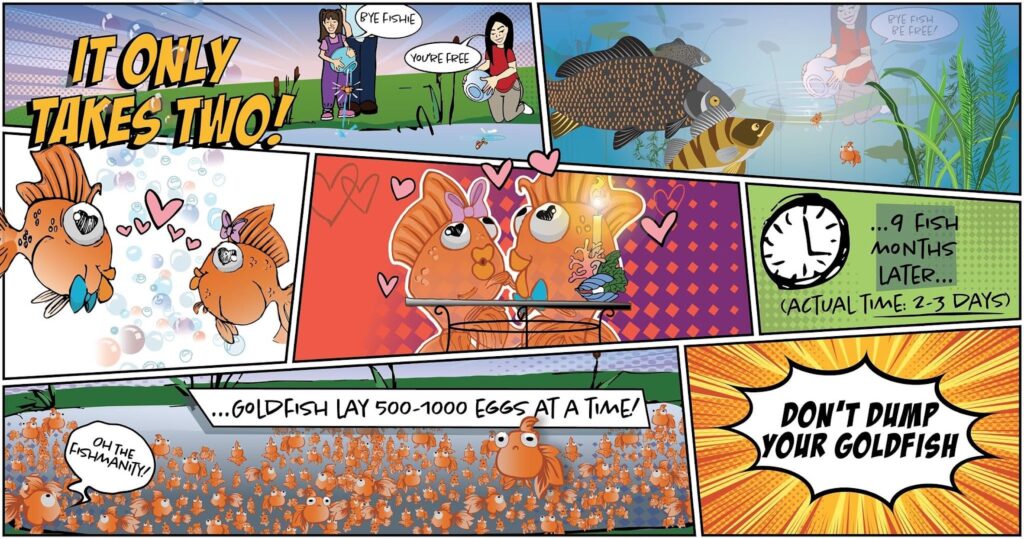
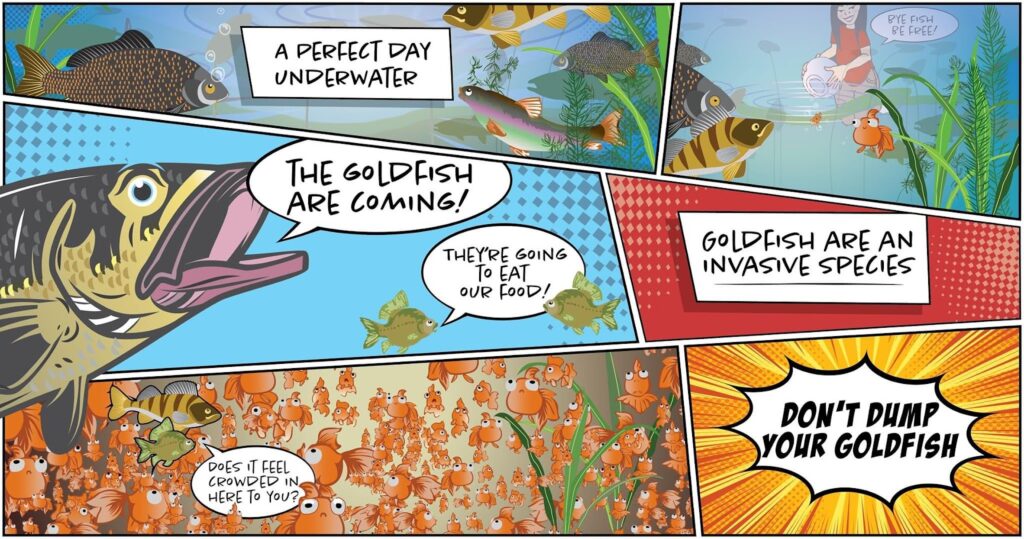
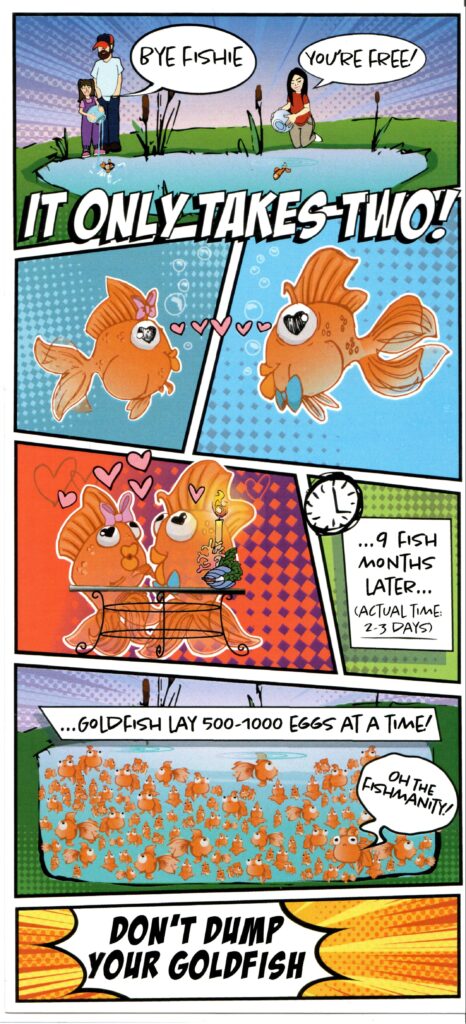
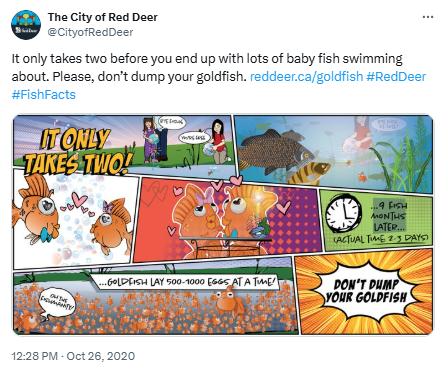
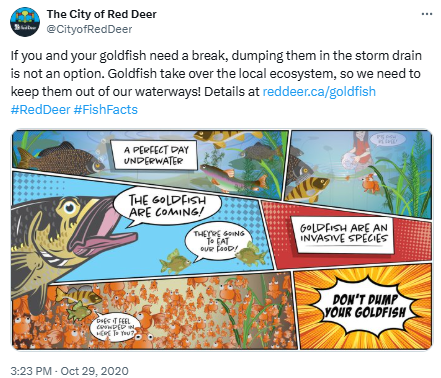
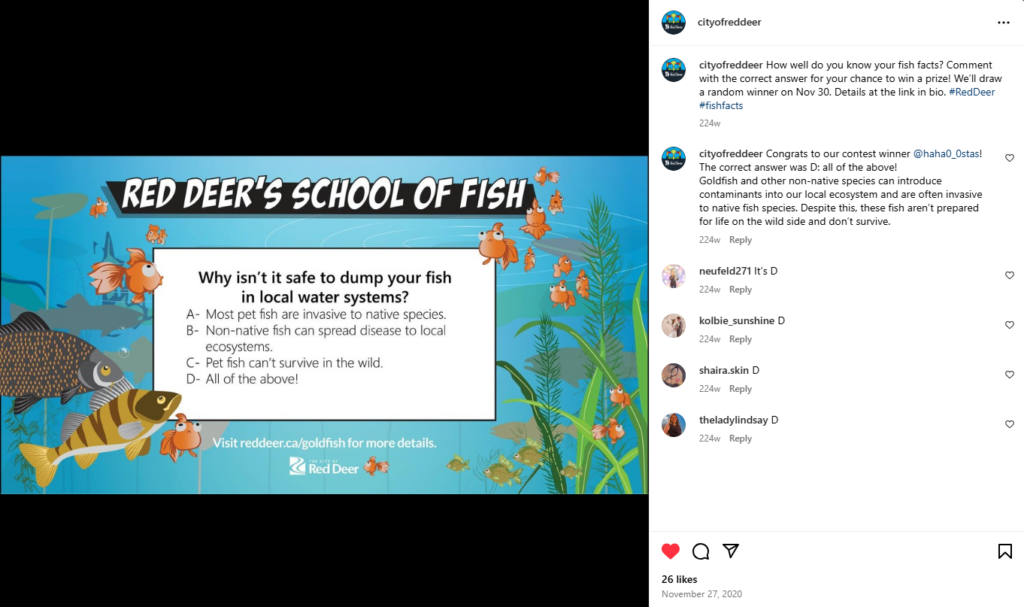
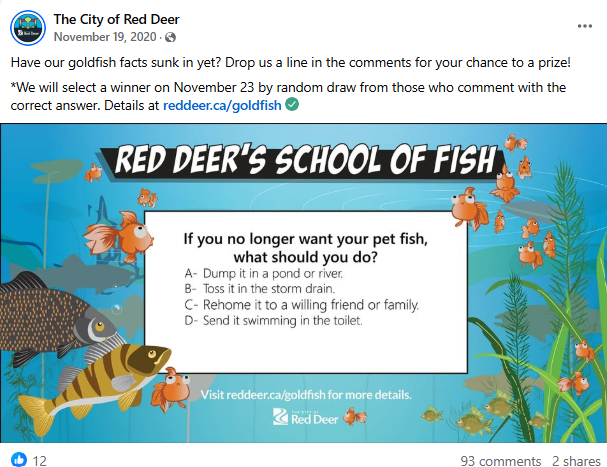
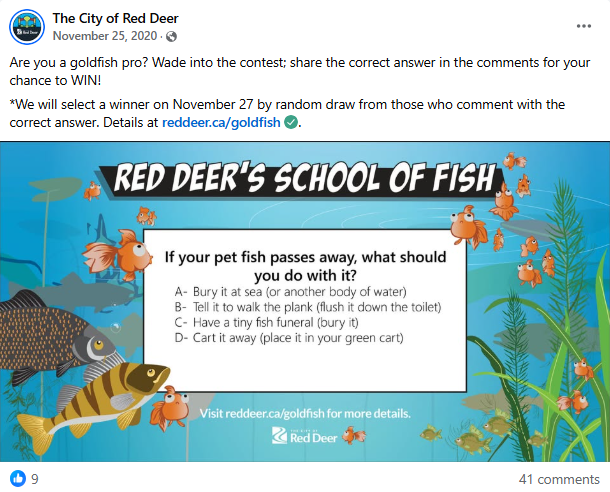
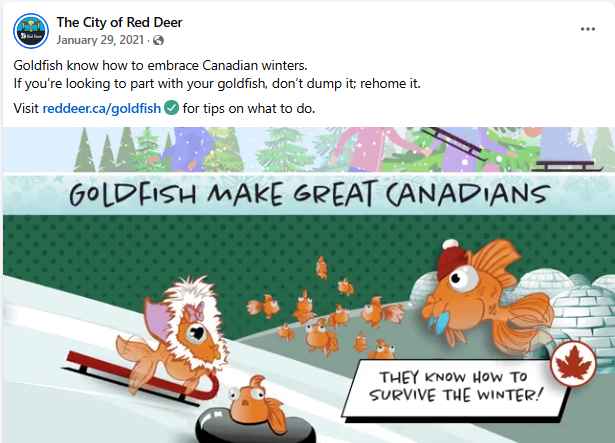
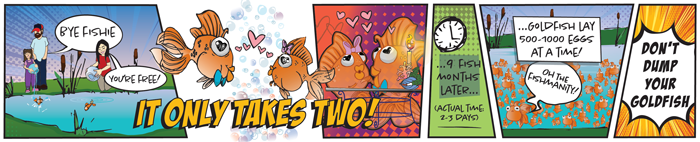
The education campaign used a unique approach by developing multiple humorous comics to illustrate the challenges of introducing non-native species to local ecosystems and provide a less-than-gentle reminder to dispose of or rehome fish properly. A mix of paid and organic tactics were used to raise awareness and inform residents, while a social media contest was used to evaluate public understanding.
Deliverables
Pondside Engagement Event: To ensure nearby residents were informed about the upcoming pond restoration project and its impacts, a pop-up event was held directly in the green space surrounding the affected pond. This casual, drop-in style outreach featured a simple table setup with signage, a small display outlining affected areas, takeaway flyers, and light refreshments. Project specialists were on hand to speak with residents, explain the scope and timeline of the work, and answer any questions or concerns. By hosting the event in the heart of the impacted area, the team made it easy for passersby to engage and ensured transparent communication ahead of the seasonal closure.
Comprehensive communications strategy following R-A-C-E formula:
- RESEARCH including business need, internal and external research and best practices.
- ANALYSIS including environmental scan, comprehensive audience breakdown (internal and external), and development of communications goals and objectives.
- COMMUNICATION including developing key messages, themes and proof points, and a detailed action plan outlining a multi-phased approach to manage issues, connect with affected audiences and educate the general public.
- EVALUATION including media monitoring, website and social media analysis and feedback from customer service staff interacting with the public.
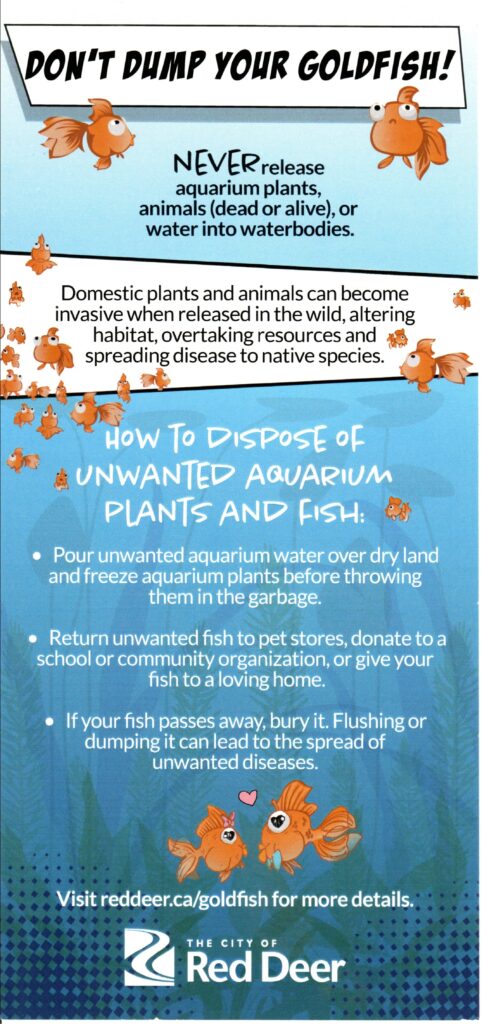
Materials development for varied media and audiences. Traditional/print materials included media releases, internal and external FAQ documents, educational rack cards, transit ads, event signage, letters to area residents, utility bill inserts and briefing notes for leadership and elected officials. Digital content included developing content for website and social media, including graphics, GIFs and a “School of Fish” contest, as well as content for the intranet and digital ads.
Challenges Faced
- An education campaign was needed to educate residents about how to dispose of goldfish and other non-native species – a lesson they may need to remember a day, week, months or years in the future, if at all. The campaign had to be memorable and effective.
- The fish cull posed a reputational risk for the City as it was anticipated the cull could affect upwards of 10,000 fish and questions about environmental concerns were expected.
Outcomes
The City received positive feedback on its transparent approach to the fish cull, as well as an engaging and memorable education campaign. Evaluation demonstrated a mostly positive sentiment toward the city in media and online platforms, while the education campaign led to more than 85% of quiz respondents identifying correct responses.
Samples
The following samples offer a demonstration of the strategy and materials developed for the project. Note: materials were developed with the support of a graphic designer.